

TOTENKOPF RING: Design & Meaning
For Himmler the mystic, design was deliberate, and the runic symbols he selected to adorn his world held deep meaning for the Reichsfurer. Himmler’s use of the skull motif for SS regalia is well known. However, according to the conferral document, Himmler ascribed special significance to the skull’s use on the Totenkopf ring. According to the document, the Death’s Head was meant to, “remind us that we should be ready at any time to lay down our lives for the good of the Germanic people.” Himmler considered the oak leaf to be the “traditional German leaf.”
While understanding the meaning of the skull and the oak leaves is simple, deciphering the meaning behind the runes used on the rings is not as straightforward. This is because runes have had different specific meanings to different peoples during different periods in history. Too often, writers and historians super-impose legitimate, but not relevant, historical significance to Nazi symbols. For our purposes, it is meaningful to try to figure out what Himmler thought about when he approved specific runes to adorn the exterior of the Totenkopf ring.
Conventional wisdom credits Karl Maria Wiligut as the designer of the Totenkopf Ring. While no period documentation has yet been discovered to prove this, it is a reasonable assumption to make. As head of the SS department of historical studies within the Race and Settlement Office, Brigadefuhrer Wiligut (who also went by the pseudonym Karl Maria Weisthor) was the “go-to” man for design of things runic within the SS.
It is likely that Himmler’s understanding of the runic alphabet derived from Wiligut’s version of the alphabet, developed by him in 1934 for use in his pseudo- religious writings. Wiligut based his own twenty-four character runic alphabet on other historical sequences such as Elder Futhark. While some of the characters in his alphabet were identical to these historical runes, others were of his own creation.
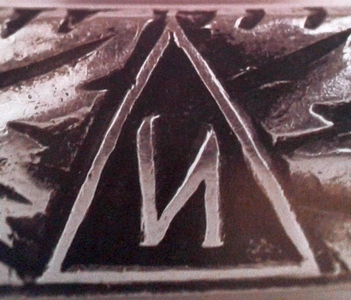
Sig Rune. In the conferral document, Himmler writes that, “the two Sig-Runes stand for the name of our SS.” These runes flank the skull, and are framed within a triangle border. This is an easy, straight forward element of ring study, and Himmler’s definition and meaning is clear.

Hagal Rune. In the ring conferral document, Himmler states that the Hagal – Rune represents the SS’s, “unshakable faith in the ultimate victory of our philosophy.” Unfortunately, this definition is very unclear. It is interesting that the German words used in the document suggest that the ring literally serves to “hold the rune in front of the eyes of the wearer .” A more readable translation of this sentiment is that the ring is designed to help the wearer “keep in mind” or “not lose sight of’ this unshakable faith.
Swastika. The swastika’s meaning is obvious to students of the Third Reich. For purposes of the ring, Himmler grouped the symbol with the Hagai rune, which according to the ring document, also presented a reminder to the wearer of his “unshakable faith in the ultimate victory of our philosophy.”
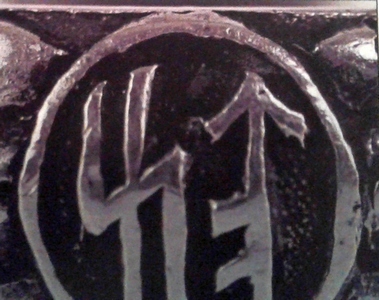
Double Runes. Although not mentioned specifically by name, Himmler states in the award document that the pair: “diametrically opposite the Death’s head are symbols from our past of the prosperity which we will restore through National Socialism.”